CyberSecurity
Apr 27, 2026
Why Are Cyberattacks Using Legitimate Logins Increasing?
CYBERSECURITY INTELLIGENCE | Pure Stack | San Jose CA
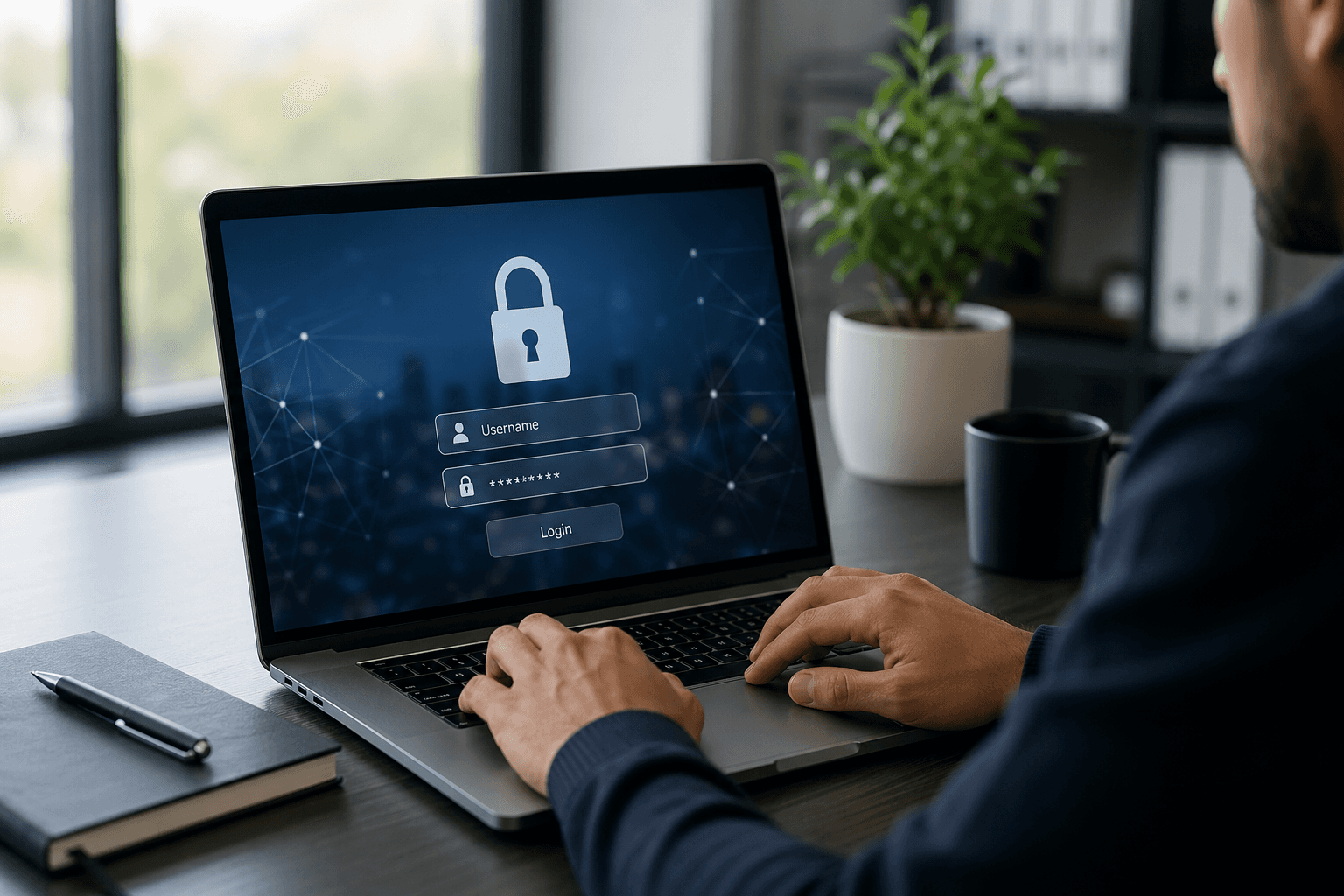
Cyberattacks using legitimate logins are increasing because attackers no longer need to break into systems — they simply log in using stolen credentials, session hijacking, or manipulated authentication workflows. These attacks are difficult to detect because they appear as normal user activity.
Executive Introduction
For years, businesses focused on preventing unauthorized access. Today, that assumption is outdated.
Attackers are no longer forcing their way into systems — they are logging in as legitimate users. For businesses across San Jose CA and the Bay Area, this creates a new reality: your systems can be accessed without triggering alarms.
This is no longer just a cybersecurity issue. It is a business risk affecting revenue, operations, and long-term growth.
What Are Credential-Based Cyber Attacks?
Credential-based attacks occur when attackers gain access using stolen usernames and passwords, phishing campaigns, session hijacking, or authentication manipulation. Unlike traditional cyberattacks, these methods do not rely on system vulnerabilities — they exploit trust and identity.
Why Are These Attacks Increasing?
1. Easier Than Breaking Into Systems
Exploiting technical vulnerabilities requires time, expertise, and risk. Logging in requires only credentials — and credentials are widely available through phishing, data breaches, and social engineering. The economics strongly favor this approach for attackers.
2. Security Tools Are Designed for Known Threats
Traditional security systems are built to detect malware, suspicious files, and known attack signatures. Credential-based attacks look identical to normal user activity, allowing attackers to operate undetected for days, weeks, or longer.
3. Growth of Cloud and Remote Access
Businesses now rely heavily on Microsoft 365, cloud platforms, and remote work environments. Each new access point is a potential entry for an attacker holding valid credentials. The more distributed your workforce, the larger the exposure surface.
How These Attacks Actually Work
Step | What Happens |
1 | Employee receives a trusted-looking email or login request |
2 | Credentials or session token are captured |
3 | Attacker logs in as a legitimate user |
4 | Access expands laterally across systems and accounts |
No technical exploit is required — only access. Once inside, attackers move quietly and deliberately.
Why This Is Dangerous for Businesses
No Immediate Detection
These attacks do not trigger alarms, do not break systems, and do not produce obvious signs of intrusion. By the time the breach is identified, significant damage may already be done.
High-Value Accounts Are Targeted
Executives and system administrators provide attackers with broad system access, financial authority, and visibility into sensitive data. Compromising a single high-privilege account can expose an entire organization.
Financial and Operational Risk
Credential-based attacks can lead to fraudulent transactions, data theft, operational disruption, and serious compliance exposure. The downstream costs — legal, regulatory, reputational — frequently exceed the direct financial loss.
Is Multi-Factor Authentication Enough?
Multi-factor authentication (MFA) is an important control — but it is no longer sufficient on its own. Attackers have developed reliable methods to bypass MFA, including:
Session hijacking, which captures authenticated tokens after login
Approval fatigue attacks, which flood users with MFA prompts until they approve
Token theft, which intercepts authentication credentials mid-session
MFA is a valuable layer of defense. It is not a complete solution.
How Businesses Can Protect Themselves
Monitor User Behavior
Implement systems that detect unusual login patterns, flag suspicious activity, and enable real-time response. Behavior-based monitoring catches what signature-based tools miss.
Apply Least-Privilege Access
Restrict user permissions to only what is needed for each role. Limiting access reduces the blast radius of any compromised account.
Train Employees Consistently
Employees are frequently the point of entry. Regular training on recognizing phishing attempts and exercising caution with login approvals is a high-ROI investment.
Use Advanced Security Tools
Move beyond traditional antivirus and firewall solutions. Identity and access monitoring, behavioral analytics, and anomaly detection are now baseline requirements for businesses operating in cloud environments.
Work with a Managed IT Partner
Proactive monitoring requires continuous attention and expertise. A managed IT provider delivers 24/7 visibility, faster incident response, and a security architecture designed to evolve as threats evolve — without the overhead of building an internal security team.
CEO Playbook: What You Should Do Now
Audit all user accounts and identify who has access to what
Review authentication systems and assess current MFA coverage
Identify monitoring gaps — particularly for cloud platforms and remote access
Reduce unnecessary privileges across all roles and systems
Engage a cybersecurity and managed IT partner to upgrade your detection and response capabilities
Frequently Asked Questions
Why are legitimate login attacks so hard to detect?
Because they produce activity that looks identical to normal user behavior. Without behavioral monitoring, there is no reliable way to distinguish a legitimate login from an attacker using stolen credentials.
Does MFA fully protect against these attacks?
No. MFA significantly raises the bar but can be bypassed through session hijacking, approval fatigue, and token theft. It should be one layer of a broader identity security strategy.
Are small and mid-sized businesses targeted?
Yes. Attackers frequently target smaller businesses because they often have weaker monitoring and access controls, making credential-based entry faster and less risky than targeting enterprise organizations.
What is the first step for a business that is unsure of its exposure?
A Security Risk Assessment provides an objective baseline of your current access controls, authentication gaps, and monitoring blind spots — and delivers a prioritized action plan.
How does a managed IT provider help with these threats specifically?
A managed IT provider monitors user behavior and access patterns continuously, applies patches and configuration updates proactively, and provides the strategic IT consulting needed to adapt your defenses as attacker techniques evolve.
Strategic Conclusion
Cybersecurity is no longer primarily about preventing access. It is about managing identity, monitoring behavior, and detecting misuse early — before attackers can move laterally, exfiltrate data, or cause lasting damage.
Businesses that adapt to this shift will reduce risk, protect operations, and build the long-term resilience needed to compete confidently in today’s environment. Those that rely on legacy perimeter defenses are increasingly exposed.
Schedule Your Free Security Risk Assessment
Pure Stack helps businesses across San Jose CA and the Bay Area detect and stop credential-based attacks through proactive monitoring and managed IT services.
Phone: (510) 505-8887
Website: purestack.com
Contact Pure Stack today to schedule your Free Security Risk Assessment.