Manufacturing
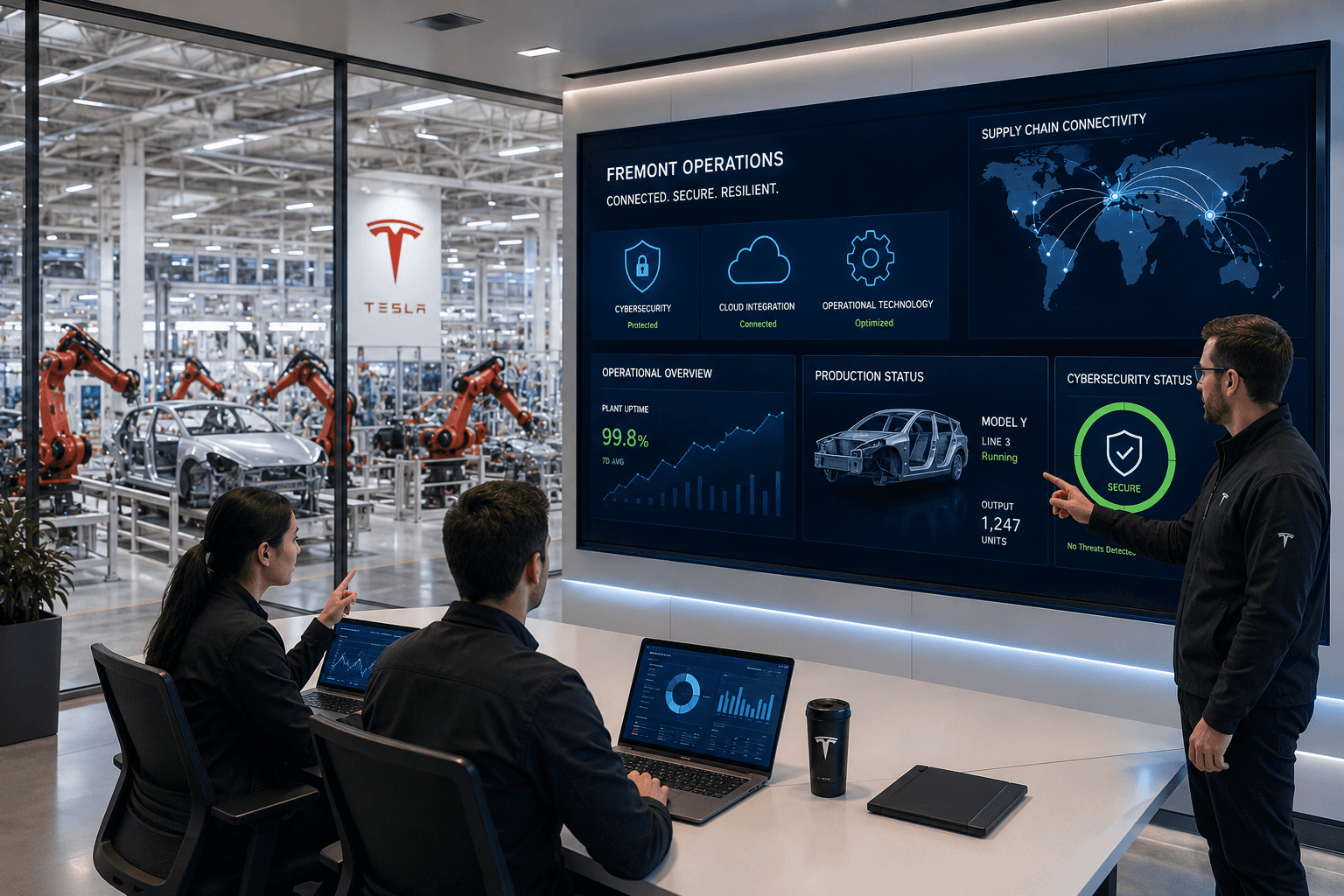
How Fremont Manufacturers Can Reduce Downtime in Tesla’s Supply Chain
OPERATIONAL CYBERSECURITY | Pure Stack | Fremont, California
Direct Answer
Fremont manufacturers reduce downtime in Tesla-driven supply chains by building real-time visibility across IT and operational systems, detecting disruptions early, and closing the gaps where modern cyber incidents begin. In a high-pressure supply chain environment, even a few hours of downtime can trigger financial loss, contract risk, and long-term damage to supplier credibility.
Executive Introduction
In Fremont, manufacturing is not just about production volume. It is about consistency, precision, and meeting the expectations of some of the most demanding supply chains in the world.
For companies supporting Tesla and similar high-performance manufacturers, downtime is not a minor inconvenience. It is a liability. A missed delivery window does not simply delay a shipment; it disrupts downstream production schedules, impacts partner operations, and puts long-term contracts at risk.
Now consider how that disruption begins, A system logs in normally at the start of a shift with no alerts or warnings. By midday, systems begin to slow, access issues appear, and machines tied to scheduling or control systems stop responding — not because of a mechanical failure, but because a cyber or system-level issue is already operating inside the environment.
Why Downtime Is More Dangerous in Tesla-Driven Supply Chains
Fremont’s manufacturing ecosystem is defined by tightly integrated supply chains. Suppliers operate within synchronized production timelines where precision and reliability are mandatory.
In these environments, reliability is not a competitive advantage. It is a baseline requirement.
Even limited downtime can result in:
Missed delivery commitments
Contract penalties
Loss of preferred supplier status
Long-term revenue impact
For suppliers operating under Tesla-level expectations, consistency is directly tied to future business.
The Real Cause of Downtime Has Changed
Many manufacturing leaders still associate downtime with:
Equipment failure
Maintenance gaps
Human error
While these risks still exist, they are no longer the primary drivers of disruption.
Today, downtime increasingly originates from digital issues inside the environment, including:
Cyberattacks using valid credentials
System misconfigurations
Lack of visibility across connected systems
These problems do not trigger alarms immediately. They build quietly and escalate until production is impacted.
The IT–OT Gap: Where Downtime Begins
Most Fremont manufacturers operate across:
IT systems (email, users, applications)
OT systems (machines, production lines, control systems)
These environments are now interconnected. However, monitoring has not evolved at the same pace. IT is often protected and visible, while OT remains under-monitored.
This gap allows threats and failures to move undetected across systems until operations are disrupted.
Business Impact for Fremont Manufacturers
When downtime occurs in a supply chain-driven environment, the impact compounds quickly. Production stops lead to immediate revenue loss, supply chain partners are affected through cascading delays, and contract obligations are put at risk.
In Fremont’s competitive manufacturing market, reliability is directly tied to business growth. A single disruption can affect multiple quarters of performance and damage long-term supplier relationships.
Why Traditional IT Support Does Not Prevent Downtime
Traditional IT setups rely on:
Firewalls
Antivirus
Basic support
These tools focus on preventing known threats but lack the ability to detect internal disruptions.
Modern incidents occur when attackers log in using valid credentials or when systems behave abnormally. Without monitoring, these events remain invisible until production is impacted.
Prevention alone is no longer sufficient.
What Actually Reduces Downtime in Modern Manufacturing
Reducing downtime requires visibility, not just infrastructure.
Manufacturers need:
Continuous monitoring
Identity protection
Integrated IT/OT visibility
Rapid response capabilities
These elements allow organizations to detect issues early and contain them before they impact production.
CEO Playbook: Questions for Manufacturing Leaders
What would one full day of downtime cost the business?
How would disruptions be detected before production stops?
Are IT and OT systems monitored together?
How quickly can teams respond to a cyber or system failure?
Is there visibility into how disruptions spread across the environment?
Conclusion
Downtime is no longer just an operational issue. It reflects how prepared a business is to operate in a connected supply chain environment.
Fremont manufacturers supporting Tesla-level ecosystems are expected to deliver:
Consistency
Reliability
Resilience
Organizations that invest in monitoring and detection are not just reducing risk; they are strengthening their position in the supply chain.
Schedule your Free Security Risk Assessment
Pure Stack helps Fremont manufacturers build secure, monitored environments that reduce downtime and protect operational performance.
Schedule your Free Security Risk Assessment before downtime forces the conversation.
📞 (510) 505-8887
🌐 purestack.com